Buying, Renting, or Developing a Build-to-Suit? How to Choose the Occupancy Model
After choosing the region and defining the property requirements, a decision arises that can affect cash flow and operations for many years: opt for build-to-suit , purchase, or lease an existing space. When evaluating whether to buy or lease commercial property , or to structure a BTS real estate solution, the company must consider not only the immediate cost, but also the long-term operational, financial, and strategic impacts.
There is no universal answer. The most suitable real estate occupancy model depends on the implementation timeline, the level of customization, capital availability, the expected length of stay, and the strategic role that address plays for the company.
Purchasing commercial property: asset control and a long-term view
Acquisition may make sense when the location is considered strategic, the company intends to remain there for a long period, and there is an interest in building equity or directly controlling future adaptations. Purchasing commercial property can also help protect against losing an important location and allow greater autonomy over changes, subject to the necessary approvals.
On the other hand, purchasing ties up capital, increases asset-related responsibilities, and may reduce flexibility if the operation changes. In addition to the purchase price, the company should assess transaction costs, renovations, maintenance, taxes, compliance work, and any difficulty in resale or repurposing.
When purchasing tends to be the better fit
Purchasing tends to be the better fit when:
- the address has lasting strategic value;
- the company has a long-term horizon;
- the property allows for expansion or multiple future uses;
- there is capital available without compromising priority operational investments.
Traditional commercial leasing: speed and flexibility
Traditional commercial property leasing usually supports faster implementation and lower initial capital commitment. It can be a good option for testing markets, opening units in repeatable formats, or preserving resources for staff, inventory, technology, and marketing.
The main concern is assessing how well the property already fits the operation. Significant renovations, layout limitations, or inadequate systems can reduce the speed advantage. It is also essential to align the lease term, responsibilities for improvements, guarantees, rent adjustments, maintenance, renewal, and exit conditions.
When traditional leasing tends to work best
Traditional leasing tends to work best when:
- there is a supply of properties close to the required standard;
- speed to market is critical;
- the company values geographic flexibility;
- the adaptation investment is controlled and consistent with the lease term.
Build-to-suit: a property developed for the operation
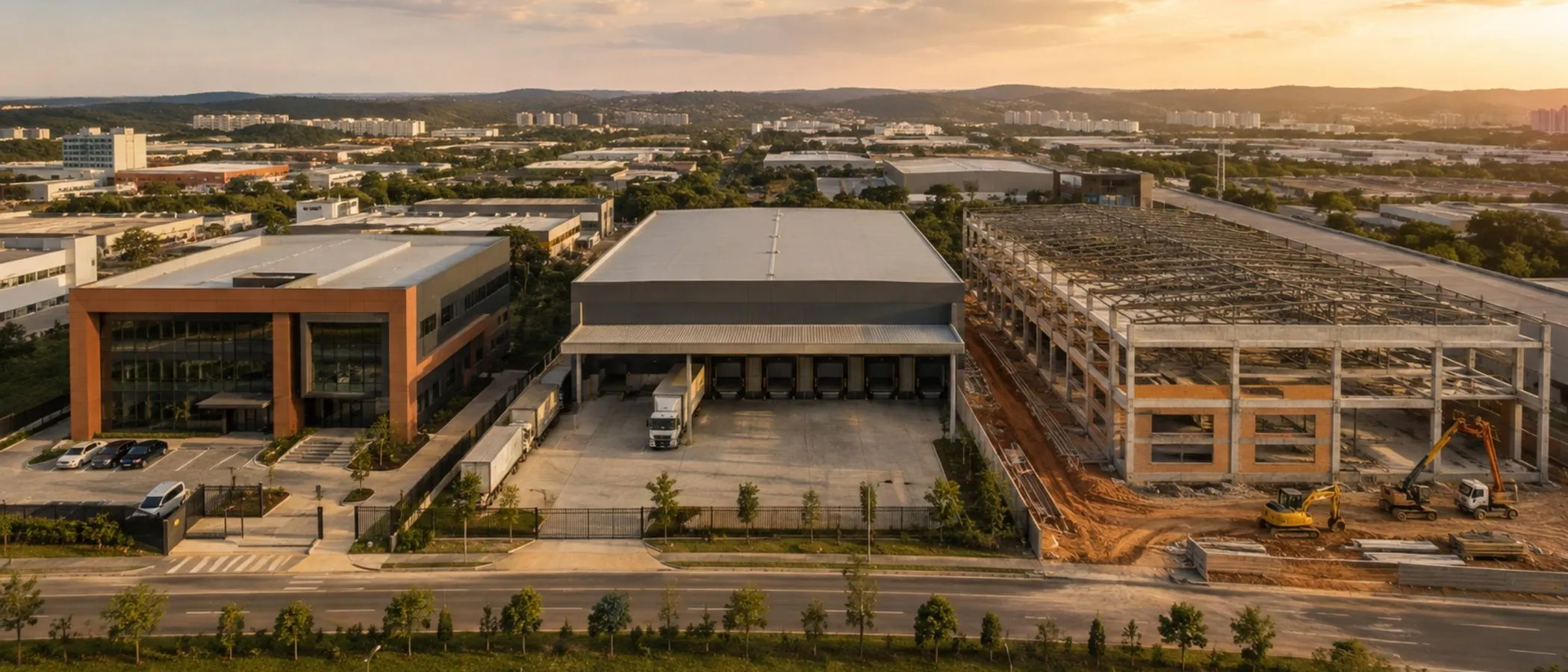
In build-to-suit, also known as BTS real estate, the property is acquired, built, or substantially renovated by the owner or investor according to specifications defined in advance by the future tenant, for a fixed-term lease. This model is provided for under Article 54-A of Brazil’s Tenancy Law.
The model can meet the needs of companies that require features difficult to find in ready-to-occupy stock: loading docks, specific internal flow, technical installations, customized administrative areas, retail standards, parking, power, or expansion capacity. In exchange for the customization and the investment made, the contract usually requires a long-term commitment and carefully negotiated terms.
When build-to-suit is worth considering
BTS is usually considered when:
- the operation requires a specific design;
- there is no ready property with sufficient suitability;
- the address has been validated as strategic;
- the company accepts a long-term commitment and can define requirements in advance.
How to choose between buying, leasing, or build-to-suit
Five questions to guide the decision
- How long does the company intend to remain in this location?
- How much capital should be preserved for the core business?
- Does the property need to be delivered ready, or can the company manage adaptations?
- What is the total cost of each alternative over the expected occupancy period?
- If the operation changes, will the property be flexible, transferable, or easily repurposed?
The answers should be turned into comparable scenarios. Present value of payments, initial investment, construction timeline, permitting risks, maintenance responsibilities, guarantees, and exit alternatives need to be analyzed with legal, financial, accounting, and technical support.
Advantages and disadvantages of build-to-suit and other models in negotiations
Negotiation starts before the contract
A sound real estate structure is built on alignment between tenant and owner. The clearer the design, timeline, delivery standard, responsibilities, and acceptance criteria are, the lower the likelihood of conflict and rework.
Porta Nova Expansão works to connect companies, property owners, and investors, helping identify assets, organize requirements, and evaluate the viable commercial format. The role of this advisory work is to build an opportunity that works for both sides — without forcing a model that does not reflect the reality of the operation.
In short, buying tends to make more sense when there is an asset-building mindset and a long stay; traditional leasing favors agility and flexibility; and build-to-suit stands out when the operation requires a highly suitable property. Defining the best occupancy model for a company depends on comparing context, total cost, and strategy clearly.
Does your company need to compare buying, leasing, and build-to-suit? Porta Nova Expansão can help map properties and structure alternatives for the next rollout.